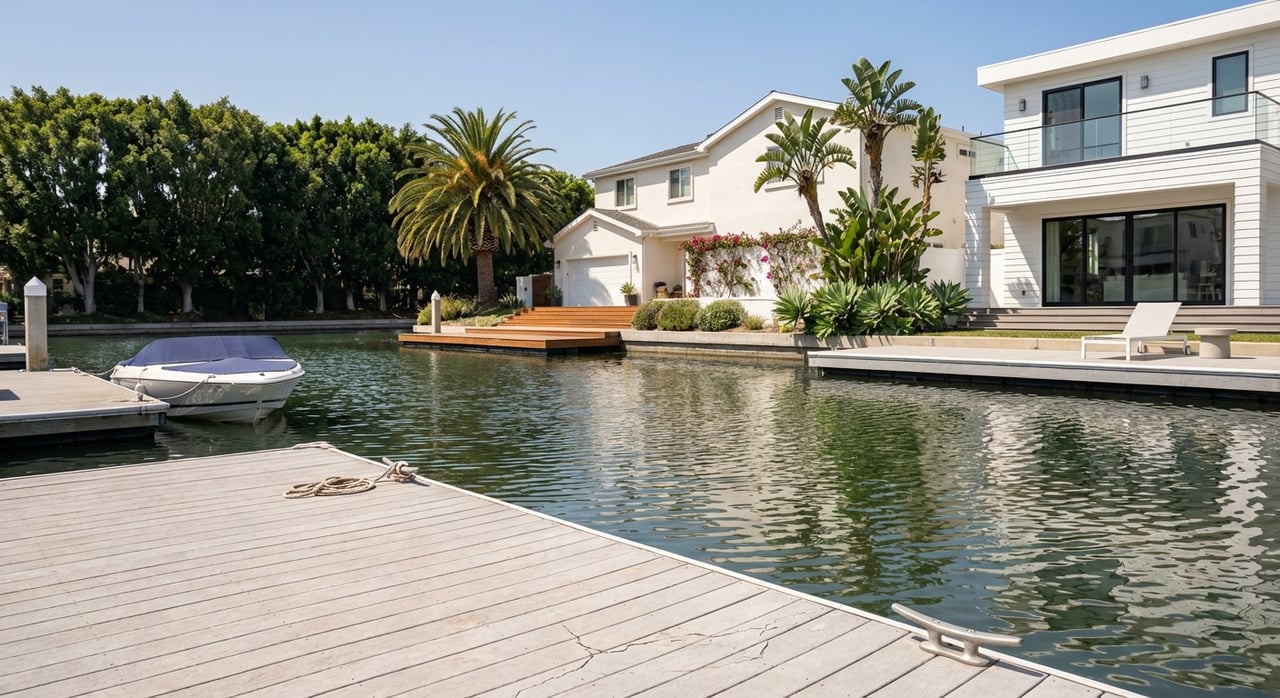
Picture a morning where the water is glassy, the air is salty, and kayakers glide by as you sip coffee on your patio. If you’re curious about a calmer, canal‑front version of Huntington Beach, Huntington Harbour offers a unique blend of boating life, small parks, and low‑key community hubs. In this guide, you’ll learn how the neighbourhood is laid out, what daily life feels like, what homes typically cost, and the key details to check if you plan to buy. Let’s dive in.
Where Huntington Harbour sits
Huntington Harbour is a planned canal community in northwest Huntington Beach built in the 1960s on filled wetlands. It includes five man‑made islands — Admiralty, Davenport, Gilbert, Humboldt, and Trinidad — linked by a network of shallow channels and small sandy coves. For a quick orientation and history, see the overview of the area on Wikipedia.
You’re just inland from Sunset Beach and Pacific Coast Highway, so ocean access is close without the heavy surf in your backyard. The layout favors low‑rise residential streets, pocket parks, and protected waterways over big commercial strips. That design choice keeps the vibe relaxed and water‑centric.
Everyday life on the water
The harbour’s calm channels are designed for small pleasure craft. You’ll see paddleboards, kayaks, and electric Duffy boats moving at slow, posted speeds rather than fast powerboats. Rentals and charters are easy to find, so you do not need to own a boat to enjoy the water. Local directories list options for boat and Duffy rentals that make it simple to host a cruise with friends or try the lifestyle first.
Peter’s Landing, along PCH, is both a marina and a waterfront hangout where you can grab a bite, stroll the boardwalk, and watch the slips. It acts as a community hub for boaters and land‑lubbers alike. Explore the dining and marina setting at Peter’s Landing.
Harbour rules keep things safe and quiet inside the channels. You’ll find slow and no‑wake signage, and local marine and harbor patrol teams monitor the area. Community resources reference these teams and rules, which contribute to the family‑friendly, low‑speed boating culture noted by regional guides such as this harbor safety overview.
Parks and beach access
Life here leans outdoors. Inside the islands, you’ll find pocket beaches often nicknamed “Mother’s Beach” for their sheltered, kid‑friendly waters. Seabridge Park is a popular grassy area and kayak launch with a low‑key neighborhood feel, highlighted by this local park guide.
For longer rides or ocean time, the Huntington Beach bike path and nearby state beaches are close by. The city’s official visitor guide to the neighbourhood emphasizes easy access to paddling, walking routes, and low‑key boardwalk time across the Harbour area. If you like a mellow start and sunset on the water, the vibe described in this neighborhood overview will feel familiar.
Shopping and dining hubs
Day‑to‑day errands are simple. Two spots anchor most routines:
- Peter’s Landing on PCH for waterfront dining, the marina scene, and casual meetups. Learn more at the Peter’s Landing site.
- Huntington Harbour Mall along Algonquin Street for grocery runs, services, and local shops. See the tenant mix at the Huntington Harbour Mall.
With these centers nearby, you can live a fairly local life without long drives for essentials.
Community events on the water
Holiday boat parades and the “Cruise of Lights” decorate the canals each winter, and many streets and docks join in. These traditions spotlight what makes the Harbour special — neighbors gather on decks and along the water to celebrate. Regional listings highlight these seasonal events in their Orange County winter roundup.
Homes and islands overview
Housing spans classic 1960s–1970s single‑family homes that have been remodeled over time, plus pockets of condos and townhomes in small gated tracts. Many waterfront homes have private docks or access to slips, while interior homes off the water offer a more affordable way into the Harbour lifestyle.
Each island has its own character. Admiralty and Gilbert feature many custom waterfront properties, Humboldt is the largest island with a mix of on‑ and off‑water homes, and Trinidad is commonly cited as one of the higher‑end pockets. Treat each island like a micro‑market when you compare options.
What drives premiums? Direct waterfront with a private dock is the clearest value booster. Main‑channel views, newer dock and seawall infrastructure, and high‑quality remodels also tend to push prices up. Tradeoffs like smaller lots, potential flood‑zone designations, and the cost of dock or seawall upkeep can temper values on some addresses.
What homes cost now
Market numbers vary by source, and each data provider uses a different metric. That is why you might see a spread between listing prices, recent sales, and valuation indexes. As of late 2025 to early 2026, here is a representative snapshot:
- Redfin median sale price (Jan 2026): about $1.45 million. This reflects closed sales in a short window.
- Realtor.com median listing price (charts through Dec 2025): about $2.05 million. This is an asking‑price metric.
- Zillow ZHVI (through Dec 31, 2025): typical home value near $2.34 million. ZHVI is an index, not a pure median sale price.
On‑the‑ground listings can range from modest condos and townhomes in the six‑figure to low‑seven‑figure range, to interior single‑family homes in the higher six figures to millions, and waterfront remodels or new builds in the multi‑million‑dollar tier. Your target island, water orientation, and dock situation will set the bracket.
Buyer checklist for waterfront life
Waterfront homes come with details you will want to verify early. Use this quick checklist to frame your due diligence:
- Dock and slip ownership. Confirm whether a dock or slip is deeded to the property or licensed through an association or lease. Verify slip length, beam, and depth at low tide, plus the condition of pilings, decking, and electrical.
- Seawall and bulkhead history. Ask for records that show the age of the bulkhead, any repairs, and engineer reports. Repairs can be costly and often require coastal permits.
- Permits and approvals. Docks and shoreline work commonly need city, state, and sometimes federal approvals. Request permit history and check for any open code items.
- Flood maps and long‑term risk. Review the address in FEMA’s Flood Map Service Center and explore local sea‑level scenarios using NOAA’s Sea Level Rise Viewer. Flood‑zone designations affect insurance and future planning.
- Insurance quotes. Standard homeowners insurance typically excludes flood. If the property is in a Special Flood Hazard Area, lenders often require a flood policy. Get early quotes and ask about elevation certificates and deductibles.
- HOA documents. If you are buying in a condo, townhome, or HOA community, request CC&Rs, budgets, reserve studies, slip allocation rules, and recent meeting minutes. Dredging or bulkhead work can lead to special assessments.
- Specialists. Line up a marine or dock surveyor, a structural engineer familiar with seawalls, a coastal‑savvy home inspector, an insurance broker who can quote flood coverage, and a title company to confirm any water access rights and easements.
Tackling these items before you write an offer will help you price risk, anticipate timelines, and avoid surprises.
Schools and getting around
School boundaries can vary by street. Many K–8 addresses in the Harbour fall within the Ocean View School District, and high school assignments are part of the Huntington Beach Union High School District depending on the address. Check school options for a specific property by using the Orange County Department of Education directory.
For commuting and travel, Pacific Coast Highway is minutes away. John Wayne Airport in Orange County is about 10 to 20 miles depending on your route, often a 20 to 30 minute drive in light traffic. Freeway access to the 405 sits a few miles inland, and drive times vary with traffic, so live maps are your friend for door‑to‑door estimates.
Is Huntington Harbour a fit for you?
If you want coastal Orange County living with calmer waters, easy paddling, and a strong sense of community around the marina, Huntington Harbour stands out. Your day can start on a bike path or board a Duffy with friends, and errands are a short hop to local centers. The housing stock ranges wide, but water access and dock details will be the deciding factors.
Thinking about selling or buying in the Harbour? You can pair local expertise with full‑service marketing while keeping more of your equity. If you would like a pricing read on your home or want help targeting the right island and dock setup, reach out to 1% Listing Broker for a clear plan and a free 1% home valuation.
FAQs
Do you need a boat to enjoy Huntington Harbour?
- No. The canals, pocket beaches, and boardwalks are relaxing even if you never step on a boat. You can try the lifestyle with local boat and Duffy rentals and charters.
Where do locals shop and eat in Huntington Harbour?
- Peter’s Landing on PCH offers waterfront dining and a marina setting, and the Huntington Harbour Mall on Algonquin Street covers groceries and everyday services.
What seasonal events make the Harbour unique?
- Holiday boat parades and the Cruise of Lights are hallmark traditions that light up the canals each winter, noted in regional event listings.
How do home prices in Huntington Harbour compare?
- Direct waterfront homes with private docks typically command a premium over interior properties. Recent metrics range from a median sale price near $1.45 million to listing and valuation figures above $2 million, depending on the data source and date.
What should buyers know about flood and seawall risk?
- Check FEMA flood maps for the exact address, review bulkhead and dock records, and explore long‑term sea‑level scenarios in NOAA’s Sea Level Rise Viewer. Early insurance quotes can clarify carrying costs.
Which schools serve Huntington Harbour addresses?
- Many K–8 addresses are in the Ocean View School District, and high school assignments are in the Huntington Beach Union High School District. Verify by address using the OCDE directory.