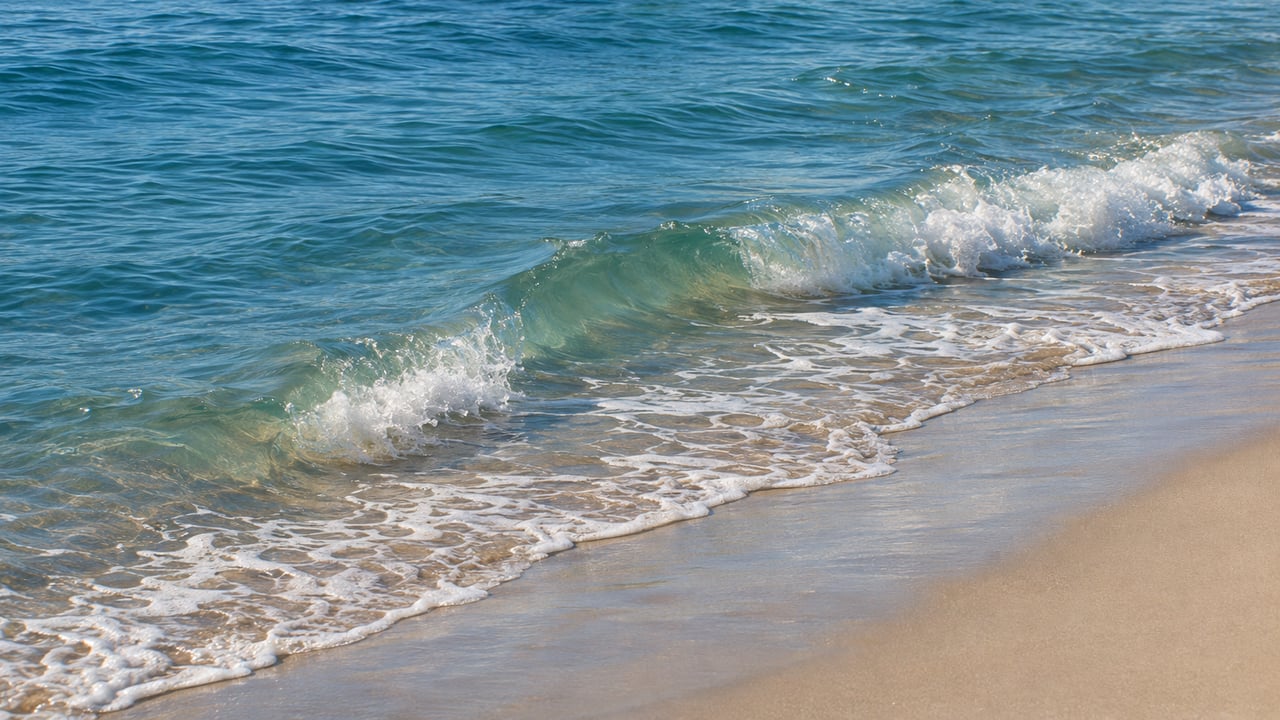
On September 19, an olive ridley sea turtle crawled up the sand just south of Lifeguard Tower 15 and laid 100 eggs a short walk from the Huntington Beach Pier. Those eggs now sit under sand in a clear-lidded cooler in a back room at the Aquarium of the Pacific in Long Beach. The incubator is held near 85 degrees, and a camera watches it day and night.
Whether they get back to the beach near the pier depends on water temperature and beach conditions. According to the Orange County Register's November 4 report on the release plan, the ocean has to be above 68 degrees for a release on the nesting beaches. If the hatchlings do return, the public finds out after it happens.
Two nests, three days apart
The pier nest was the second of two. Here is how the fall went, according to the City of Huntington Beach's September 22 notice, NOAA Fisheries and the Register's follow-ups.
| Date | What happened |
|---|---|
| Sept. 16 | HBFD Marine Safety lifeguards respond to a possibly injured turtle near Surfside and find it laying eggs |
| Sept. 19 | Lifeguards respond to a second sighting near the Huntington Beach Pier and find another turtle laying eggs |
| Sept. 25 | Biologists move all 204 eggs, 100 from Huntington Beach and 104 from Seal Beach, to the Aquarium of the Pacific |
| Early Nov. | Aquarium staff say the eggs could hatch any day |
NOAA called the September 16 nest the first natural nesting by any sea turtle species ever recorded on the U.S. West Coast. The first nest was on the Seal Beach side, in the sand between the waves and the oceanfront condos on Surfside Avenue. The Register reports that, judging from photos, the two nests probably came from two different turtles. Morning beachgoers spotted both and alerted authorities.
At the pier, lifeguards set up a perimeter right away and called in the agencies. NOAA crews came back to put up a more permanent fence and interpretive signs. For about a week, part of one of the busiest beaches in Orange County was fenced off for a clutch of ping-pong-ball-sized eggs.
Why the eggs left Tower 15
The original plan was to leave the nest where it was. NOAA's note in the city's notice said the team would monitor it through an incubation period that usually runs 45 to 60 days. Then the forecast changed. The Aquarium of the Pacific said hazardous surf, beach erosion and the risk of flooding led to the decision to move both nests on September 25.
The timing turned out to be right. In an October 23 Register story, a U.S. Fish and Wildlife Service representative said that after Tropical Storm Rachel both beaches had high surf and standing water near the nest sites, and that the nests likely would have been inundated and destroyed.
Olive ridleys usually nest on tropical beaches. NOAA lists Mexico, Nicaragua, Costa Rica and Panama as home to the major Pacific nesting populations. The surf conditions that lifeguards near the pier treat as a normal part of the year were enough to put this nest at risk.
What incubation looks like in Long Beach
The Register story describes very hands-on care. Aquarium veterinarian Dr. Lance Adams said the eggs started out in a room held at about 82 degrees. On advice from NOAA and federal wildlife partners, the temperature was later raised to about 85. Humidity has to stay between 90 and 100 percent, and staff mist the incubator when it drops. Staff check in person about five times a day, and the camera lets Adams look in from home at any hour.
The first sign of hatching is a dip in the sand. Once eggs hatch, they no longer hold up the sand above them, so it sinks. NOAA's usual 45-to-60-day window puts the pier clutch somewhere between early November and about November 18. Adams told the Register that nobody can know which eggs are viable until they hatch:
"We won't know until they hatch, or if we pass the period, or if they need more time."
The 68-degree rule decides which beach
When hatchlings emerge, the next step depends on the ocean more than on the Aquarium. Fish and Wildlife officials described the plan to the Register:
- If the water and beach conditions are right, hatchlings go on the sand just above the surf zone and crawl the last stretch to the water on their own. The target for a nesting-beach release is ocean water above 68 degrees.
- If conditions fall outside that range, the interagency team will look at releasing them from a boat directly into the ocean, or at another location where the water better supports survival and dispersal.
- Either way, the move happens quickly once they hatch, and Adams said it can't be planned in advance.
The season works against a return to Tower 15. Ocean temperatures fall every fall, and the Register notes they are already dropping. NOAA Fisheries also estimates that Southern California water will stay about 5.4 to 7.2 degrees above normal into next year because of El Niño conditions. That warm-water margin is what gives the beach option a real chance in late fall.
Why there will be no crowd at the release
If the hatchlings do come back to the sand near the pier, there won't be a public event. Adams told the Register that crowds could change how the turtles behave, and that even camera flashes could throw off their trip to the water. Details will be released only after the turtles are back in the ocean. "It's just better to not have large observation groups of people," he said. "People are so excited."
After release, the hatchlings drift for a while until they find a place to settle and grow, Adams said. They won't be satellite-tagged. The nesting was so unexpected that there wasn't time to request the permits. Olive ridleys mature at around 14 years, so officials told the Register it's too early to say whether any of these hatchlings will come back to Southern California beaches to nest.
Ventura makes three
Huntington Beach and Seal Beach no longer have the only nests. The Los Angeles Times reported on November 3 that an olive ridley nest turned up November 1 at San Buenaventura State Beach in Ventura, the third documented sea turtle nest on the U.S. West Coast. Those eggs are being protected on the beach where they were laid.
NOAA says the exact reasons aren't clear. Warm sea-surface temperatures from ongoing marine heat waves and the coming El Niño are likely factors, along with the species' nomadic habits and possible navigation errors. NOAA also says a female olive ridley usually lays two to three nests a season, about two weeks apart, and it has been watching for more. The Times reported in September that it is still unclear whether the Orange County nests were a one-off or a sign of more to come in future seasons.
What to do if you see tracks near the pier
The pier nest was found because people on the beach early in the morning saw something and spoke up. The city and NOAA ask that anyone who comes across a turtle, tracks or a possible nest:
- Keep their distance, and leave any fencing or signs alone.
- Report sightings through NOAA's West Coast Sea Turtle Reporting form, or tell the nearest lifeguard.
- Call the 24/7 West Coast Sea Turtle Stranding Hotline at 562-506-4315 for a stranded turtle, tracks or a possible nest.
Sea turtles are protected under the Endangered Species Act, and the city notes that the interagency monitoring team took all of the media from the nesting sites. The partners NOAA credits include the U.S. Fish and Wildlife Service, the California Department of Fish and Wildlife, the cities of Huntington Beach and Seal Beach, the Aquarium of the Pacific, the U.S. Navy, Bolsa Chica Ecological Reserve, CSU Long Beach and Surfside Colony.
1% Listing Broker is based a few miles inland from Tower 15, and we'll be watching the pier sand like everyone else this month. If you're thinking about what your own place near the water is worth, Jerry Del Mauro can walk you through it. Get your free 1% home valuation.