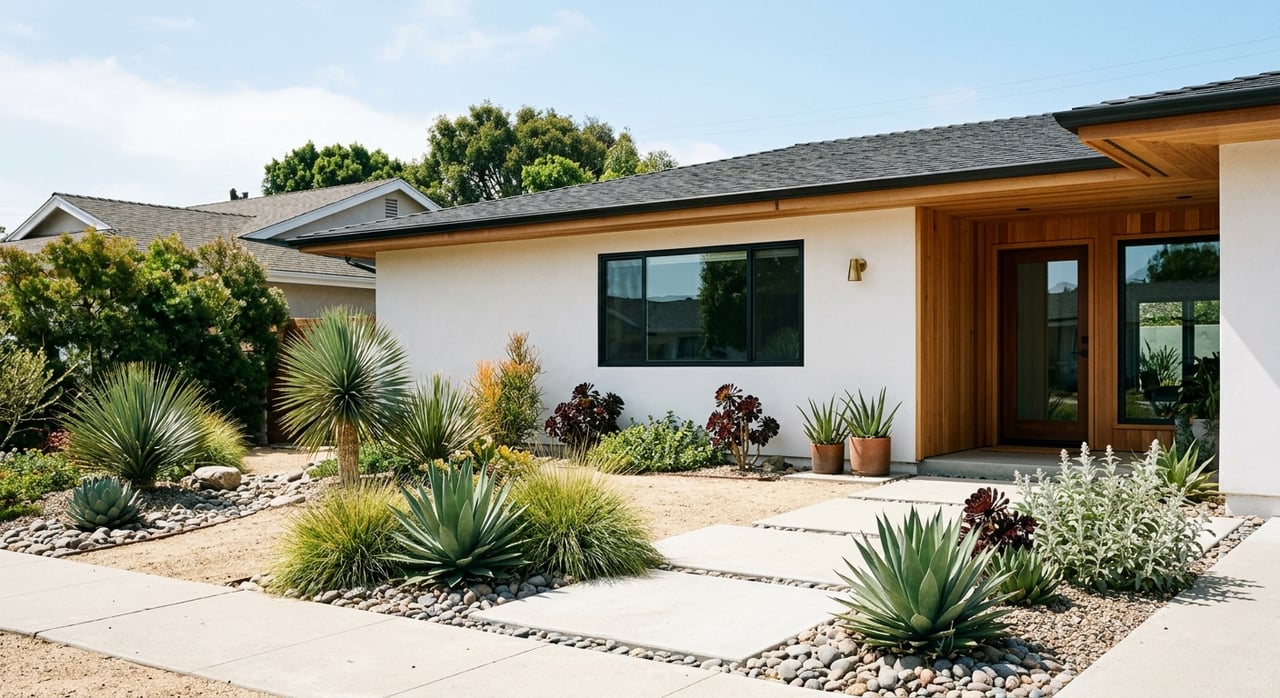
Trying to choose between Costa Mesa and Fountain Valley? You are not alone. Both cities sit in central Orange County, both come with strong location appeal, and both are expensive enough that the wrong fit can feel costly for years. This guide breaks down home prices, commute patterns, school structures, parks, and day-to-day lifestyle so you can decide which community lines up best with how you want to live. Let’s dive in.
Costa Mesa vs. Fountain Valley at a Glance
If you want the short version, Costa Mesa tends to feel more active, mixed-use, and amenity-rich. Fountain Valley tends to feel quieter, more residential, and more centered around parks and neighborhood routines.
The price gap between the two is fairly small right now, so your decision may come down less to budget and more to lifestyle. If you are choosing between these two Orange County communities, the better question is often not which is cheaper, but which feels more like home.
Home Prices and Market Pace
Both Costa Mesa and Fountain Valley are high-cost housing markets by any standard. As of March 31, 2026, Zillow reports a typical home value of $1,413,322 in Costa Mesa and $1,394,237 in Fountain Valley.
Median sale prices are also close. Costa Mesa sits at $1,405,500, while Fountain Valley comes in at $1,389,833. That puts Costa Mesa slightly ahead on price, but not by a dramatic margin.
Inventory is one place where the difference shows up more clearly. Costa Mesa has 126 homes for sale compared with 53 in Fountain Valley, which suggests buyers may see more options in Costa Mesa at a given time.
Fountain Valley, however, is moving a bit faster. Homes there are reaching pending status in about 10 days versus 14 days in Costa Mesa, which can point to tighter supply and quick decision-making.
What the numbers mean for buyers
If you are buying, Costa Mesa may give you a broader selection. That can be helpful if you want to compare neighborhoods, lot sizes, or home styles without waiting for the right listing to hit the market.
If you are focused on Fountain Valley, expect a tighter field. Fewer available homes can mean you need to move quickly when a property checks your boxes.
What the numbers mean for sellers
For sellers, both cities support strong pricing. Costa Mesa may offer a small pricing edge based on current Zillow figures, while Fountain Valley’s lower inventory and faster pending pace may help well-prepared listings attract attention quickly.
That is where strategy matters. Pricing, presentation, photography, and exposure can all shape your final result, especially in two markets where the gap is narrow.
Rental Costs and Cost Context
Renters see a similar pattern. Average asking rent is about $3,058 in Costa Mesa and $2,853 in Fountain Valley.
That does not make Fountain Valley low-cost, but it does make it somewhat less expensive on the rental side. If you are relocating and planning to rent before you buy, that difference may matter.
Census QuickFacts adds long-range context. Median owner-occupied home values are above $1 million in both cities, and median household incomes are in the low-to-mid $100,000s, with Fountain Valley slightly higher on household income and owner-occupied value in those ACS survey estimates.
The broad takeaway is simple: both cities are established, high-value Orange County communities. You are not choosing between expensive and affordable. You are choosing between two versions of a premium central OC lifestyle.
Schools and Campus Structure
School setup is one of the biggest practical differences between Costa Mesa and Fountain Valley. Even when home prices are close, school structure can shape your daily routine and long-term planning.
Costa Mesa is primarily served by Newport-Mesa Unified School District. According to the district, it has 33 schools and about 18,000 students across the Costa Mesa and Newport Beach area.
Within Costa Mesa, the district lists multiple elementary schools along with Costa Mesa Middle and High School, Early College High School, Back Bay High School, Estancia High School, and TeWinkle Middle School. In practical terms, that means families may have more campus pathways to compare within the broader district footprint.
Fountain Valley has a smaller K-8 structure. Fountain Valley School District says it includes 10 schools serving more than 6,000 students, with seven elementary schools and three middle schools.
For high school, students transition into Huntington Beach Union High School District. That district serves nearly 14,000 students from four feeder districts and includes Fountain Valley High School among its six comprehensive high schools.
How the school setup feels day to day
Costa Mesa may appeal to buyers who want a larger district footprint and more school-path variety. Fountain Valley may appeal to buyers who prefer a more compact neighborhood-based K-8 structure before the high school transition.
This is less about one system being better and more about which setup fits your preferences. If your household values more campus options, Costa Mesa may stand out. If you want a smaller K-8 structure with a clear local feel, Fountain Valley may be a stronger match.
Commute Access and Transportation
If you care about freeway access, Costa Mesa has the denser network. The city notes access via I-405, SR-73, and SR-55, and specifically highlights SR-55 as the only freeway providing a direct north-south connection between central Orange County and the coastal region.
Costa Mesa also has a few transportation extras that shape convenience. The city promotes Let’s Go Costa Mesa, a free on-demand electric rideshare service, and OCTA routes including 35, 43, and 86 serve the city directly.
Fountain Valley also benefits from strong regional access. The city emphasizes proximity to freeways, John Wayne Airport, and Los Angeles International Airport, which can matter if you commute across Orange County or travel often.
Public transit in Fountain Valley is more bus-based. The city points residents to OCTA service and its senior Hop On transportation program, and OCTA lists direct service including Route 37 connecting La Habra and Fountain Valley.
Commute times in each city
Census travel-time data offers a useful baseline. Mean travel time to work is 22.4 minutes in Costa Mesa and 26.0 minutes in Fountain Valley.
That does not predict your exact drive, of course. But on average, Costa Mesa residents spend a bit less time commuting, which may support the idea that its freeway network and central positioning offer some practical time savings.
Parks, Recreation, and Lifestyle
This is where the personality difference becomes easiest to picture. Costa Mesa leans more urban, arts-forward, and retail-oriented, while Fountain Valley leans more suburban, park-centered, and residential.
Costa Mesa describes itself as one of California’s more eclectic and vibrant cities and emphasizes its City of the Arts identity. Local landmarks and amenities include South Coast Plaza, Segerstrom Center for the Arts, South Coast Repertory, The Lab, The Camp, and the SoCo Collection.
The city also offers 28 parks, two municipal golf courses, and recreation spaces like Fairview Park, Bark Park, and the Santa Ana River Trail. If you like having cultural venues, dining, shopping, and outdoor options packed close together, Costa Mesa checks a lot of boxes.
Fountain Valley presents a different kind of appeal. The city describes itself as a centrally located Orange County community known for well-maintained streets, 20 parks, and a strong emphasis on quality of life.
Its signature outdoor amenity is Mile Square Park. The city puts it at 640 acres, while OC Parks describes Mile Square Regional Park as 607 acres, but either way, it is a major open-space feature with golf courses, sports fields, lakes, picnic areas, and an archery range.
Fountain Valley also operates a 78-acre Recreation Center and Sports Park on the west side of Mile Square. For buyers who picture regular walks, youth sports, open green space, and a steadier neighborhood rhythm, that is a meaningful advantage.
Which City Fits Your Lifestyle?
If you are still torn, it helps to match each city to the kind of day-to-day life you want.
Costa Mesa may fit you if you want:
- A more active, mixed-use environment
- Strong access to shopping, arts, and dining destinations
- More school-path variety within a larger district footprint
- Access to multiple freeway corridors
- A slightly more urban feel in central Orange County
Fountain Valley may fit you if you want:
- A quieter, more residential setting
- Large park assets and recreation space
- A compact K-8 school structure
- A neighborhood-centered feel with central OC access
- A stable suburban environment close to job centers and the 405 corridor
In many cases, the deciding factor is not price. It is whether you want more energy and variety or more calm and open space.
A Smart Way to Decide
Before you commit to either city, spend time comparing your real routine. Think about how often you commute, what kind of weekend plans you enjoy, whether school structure matters to your household, and how important larger parks or a stronger dining and arts scene are to you.
You should also pay attention to inventory. Because Fountain Valley has fewer homes for sale, your timing may shape your options more there than in Costa Mesa.
If you are selling in one city and buying in the other, your move deserves a strategy that looks at both sides of the equation. The right plan can help you protect your timing, market your current home well, and keep more of your equity as you transition.
Whether you are comparing Costa Mesa and Fountain Valley as a buyer or preparing to sell in one of these Orange County communities, working with a local team can help you cut through the noise. If you want clear guidance and full-service support while keeping more of your proceeds, connect with 1% Listing Broker for a free 1% home valuation.
FAQs
What is the main difference between Costa Mesa and Fountain Valley for homebuyers?
- Costa Mesa generally offers a more active, mixed-use feel with more inventory, while Fountain Valley tends to offer a quieter, more park-centered residential environment with slightly tighter supply.
Which city is more expensive, Costa Mesa or Fountain Valley?
- Based on Zillow data from March 31, 2026, Costa Mesa is slightly more expensive in typical home value, median sale price, and asking rent, though the gap is relatively small.
How do Costa Mesa and Fountain Valley schools differ?
- Costa Mesa is primarily served by the larger Newport-Mesa Unified School District, while Fountain Valley uses a compact K-8 district structure through Fountain Valley School District before students move into Huntington Beach Union High School District.
Is commuting easier from Costa Mesa or Fountain Valley?
- Costa Mesa has access to I-405, SR-73, and SR-55 and shows a shorter mean travel time to work in Census data, while Fountain Valley also has strong freeway access but posts a slightly longer average commute time.
Which city has better parks and recreation, Costa Mesa or Fountain Valley?
- Costa Mesa offers a wider mix of parks, golf, trails, and arts-oriented amenities, while Fountain Valley stands out for its large open-space assets, especially Mile Square Park and the Recreation Center and Sports Park.
Should you choose Costa Mesa or Fountain Valley if prices are close?
- When prices are similar, the choice often comes down to lifestyle, school structure, commute needs, and whether you prefer a more urban setting or a more suburban, park-focused environment.